Introduction
75 years of age and I’ve had my share of injuries. Usually not dramatic—just that nagging pain that makes you wince when you reach or bend over for something. I know these little injuries can turn into big problems if you're not careful. I’ve learned to initiate treatment early.
Many years ago I found red light therapy works. I have invested in multiple devices and recommended and even loaned mine to people suffering and in pain. I'm a doctor, and I believe in following the data. So I started digging into the research. I was amazed that I was so late to learn some of the newer science.
What I found shocked me. This wasn't some made-up nonsense. The science behind red and near-infrared light therapy is solid. And the benefits go way beyond sore muscles. We're talking about cellular energy, detoxification, brain health, inflammation, even longevity.
My energy is up. My sleep has improved. Even my recovery time after workouts is noticeably faster. I’m not where I want to be yet. I keep exploring and have some items still on my list of things to make the progress even better.
Here's what I want to share with you today: how light—the right kind of light—can literally change how your cells function. And the best part? You can do this at home for less than the cost of a gym membership.
What Actually Happens When Red Light Hits Your Cells
Let me explain this in the simplest way possible, because the science is actually pretty cool once you understand it.
Inside every cell in your body, you have these tiny power plants called mitochondria. They produce ATP—which is basically the energy currency your cells use to do everything. Stay alive. Repair damage. Fight infection. Think. Move. All of it.
But here's the problem: as we age, our mitochondria get sluggish. They produce less ATP. They accumulate damage. And when your cellular power plants aren't running well, everything else starts breaking down too.
This is where red and near-infrared light comes in.
When you expose your body to specific wavelengths of light—particularly in the 600-1000 nanometer range—something remarkable happens. These photons of light penetrate your skin and get absorbed by a molecule in your mitochondria called cytochrome c oxidase. This is like hitting the turbo button on your cellular energy production.
Studies show this process, called photobiomodulation, can boost ATP production by up to 30-40%. That's huge. More energy means faster healing, better recovery, sharper thinking, and more resilience against age-related decline.
The Heat Component Nobody Talks About
But here's what most people don't understand about effective light therapy: it's not just about the light. It's about the heat.
Let me tell you about my expensive mistakes first. I bought LED red light panels. Spent thousands of $$$ on them. Then I went even bigger—bought one of those fancy LED red light saunas that cost more than my first car. I figured if I was going to do this right, I'd invest in the "best" equipment.
And you know what? They worked okay. I saw some benefits. But something was missing.
Then I started reading deeper into the research. I discovered that traditional red light LED panels deliver light at specific narrow wavelengths, but they stay cool. They're missing something critical—the thermal component that triggers a whole cascade of additional healing responses. The wave forms of LEDs are also an issue. So that’s two problems.
That's when I made the switch to incandescent bulbs. Here's why they're different: incandescent bulbs produce a smooth, full-spectrum curve that peaks in red and near-infrared wavelengths, just like natural sunlight and firelight. And they produce radiant heat that penetrates deep into your tissues. EMF exposure is also an important issue and I address that in other writings.
The difference was immediate. I felt it in my body. The expensive LED panels gave me some results. The simple incandescent setup gave me transformation.
This combination of light and heat does several things LEDs can't:
First, it activates heat shock proteins. These are special molecules that help your cells repair damaged proteins, clear out cellular junk, and protect against future stress. The research on heat shock proteins and longevity is fascinating—organisms with robust heat shock responses live longer and healthier lives.
Second, it triggers deep sweating and detoxification. We live in a toxic world. BPA, phthalates, heavy metals, pesticides—these accumulate in our fat cells and tissues. Your body needs a way to clear them out, and sweating is one of the most effective pathways. Studies have found higher concentrations of certain toxins in sweat than in blood or urine. I often am amazed at the smell of the sweat when I am drying the sweat off of my body with a towel. I have heard stories of stains from that toxic dumping in the sweat.
Third, it raises your core body temperature by 1-3 degrees Fahrenheit. This is critical. It only happens if you have the red light bulbs in an enclosed space where the heat builds up. The gold-standard longevity research on sauna use shows that health benefits kick in when you achieve this temperature rise and lose about a pound of water through sweat. Water weighs about 8 pounds a gallon so that’s ⅛ of a gallon. That's the threshold where cardiovascular conditioning, cellular repair, and detox pathways really activate.
What I'm Actually Using Now
There is no need to make the same expensive mistakes I have.
My current setup—the one that actually works better—costs less than a few hundred dollars.
● Two 250-watt red heat lamp bulbs (available here) ● Two simple clamps fixture from Lowe's (this one works great) ● This is entry level and, of course for optimal effect you should multiply this set up. I am even building stands where i can do this outside of a sauna setting. In addition to converting an old sauna to incandescent red light bulbs which create the heat and the light I am using the stands to add red light and heat to me when using a rowing machine for example. In the winter that glowing heat is a nice substitute to sitting next to the pot belly stove in the winter.
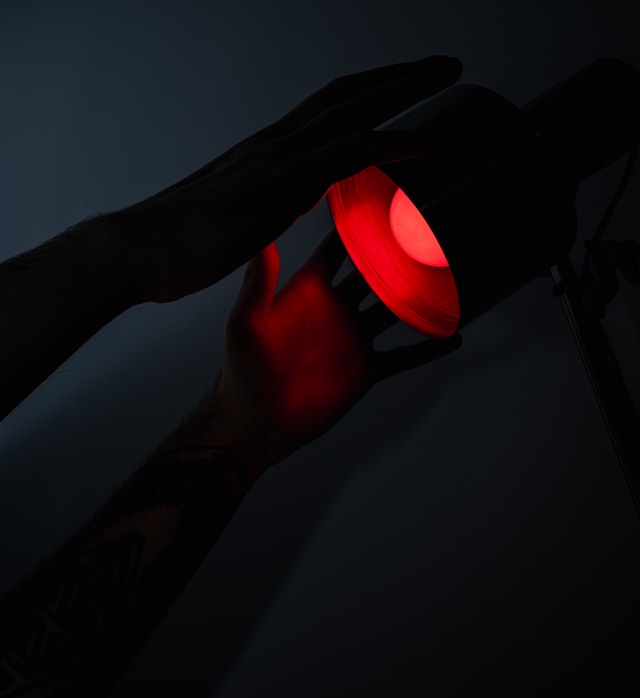
I can also clamp one to my bathroom door frame, sit in a comfortable chair and focus one on a target that needs some help in recovery. Get about 18-24 inches away, and let the light do its work for 20-30 minutes.
The bulbs produce a smooth spectrum from 600nm up to 4000nm—covering visible red, near-infrared, mid-infrared, and even some far-infrared. This is the same spectrum our ancestors experienced sitting by fires for thousands of years. It feels natural because it is natural. Your eyes respond to that same light wavelength that is pronounced at sun rise and sunset. Don’t miss the sunrise red light. You can look at it when it’s low in the sky.
Compare that to LED panels that cost $500-3000 and only emit narrow spikes of light at 660nm and 850nm. They're missing the full healing bandwidth. And they flicker—which can stress your nervous system even if you can't consciously see it.
Want the Complete Protocol?
I've put together a detailed guide covering:
● Exact timing and positioning for different health goals ● How to combine red light with other longevity practices ● What to expect in the first 30 days ● Common mistakes that reduce effectiveness ● Advanced strategies for detox, recovery, and cognitive enhancement ● How to track your results objectively
Plus special sections on:
● Using red light therapy if you have chronic conditions ● Integration with cold therapy and exercise ● Troubleshooting guide for people who "don't respond"
The Blue and Red Connection: Methylene Blue
While we're talking about light therapy, I need to mention something that you will see mentioned on many podcasts. There are many advocating methylene blue. There was even a viral, online photo of Bobby Kennedy placing blue drops in his water on a plane.
Methylene blue is a pharmaceutical-grade compound that was originally used as a dye, then discovered to have profound effects on mitochondrial function. When you combine methylene blue with red light therapy, something interesting happens—the effects seem to multiply. I have written a supplement on the cautions of using methylene blue. It does come with risks that most are ignoring.
Here's the simple explanation: methylene blue acts as an electron donor in your mitochondria, making them more efficient at producing ATP IF you have a unblocked electron transport chain. Red light stimulates the mitochondria to produce more ATP. They can work synergistically if they are indicated and monitored by your physician. Don’t think they are a panacea for low energy. Read the follow up article.
If you're taking a SSRI anti-depressant or certain other medications, it has to be discussed and monitored by your doctor. As I alluded to in the above, this science is evolving so stay tuned.
The Bottom Line
At 75, I'm not interested in gimmicks or expensive toys. I want things that work. Things backed by real science. Things I can actually do consistently.
Red light therapy checks all those boxes.
The research is clear: the right wavelengths of light can enhance mitochondrial function, reduce inflammation, support detoxification, improve recovery, and potentially extend both lifespan and healthspan. The longevity studies coming out of Finland and other countries show that regular heat and red light exposure—done right—can reduce all-cause mortality by up to 5 times.
You don't need a fancy setup. A couple of bulbs. A couple of fixtures. A small space to let the heat build up. Twenty minutes a day. That's the beauty of this. It's simple. It's affordable. And it works.
Your cells remember what firelight feels like. Give them back what they've been missing.