Introduction
What is important to consider for a long and rewarding life? It isn’t a full-body MRI, it’s not a 130 element biomarker blood panel, although I will recommend that for most.
This article forces you to separate signal from noise. Every year brings a new panel, a new scan, a new subscription promising the complete picture. Most of what's in that noise doesn't change what you'd actually do differently on Monday morning.
Here are my most important things to consider. Two of them matter more to me than the rest, so I'm starting there instead of saving them for the end.
Who's in your corner
Of my important things to think about, this is the one I'd protect first. It doesn't show up on any blood panel, tape measure, or cuff, and I'd argue it carries as much weight as the others combined.
What I mean by “in your corner” is the actual people in your life. Who could you call at 2 a.m. about anything and know they'd pick up?
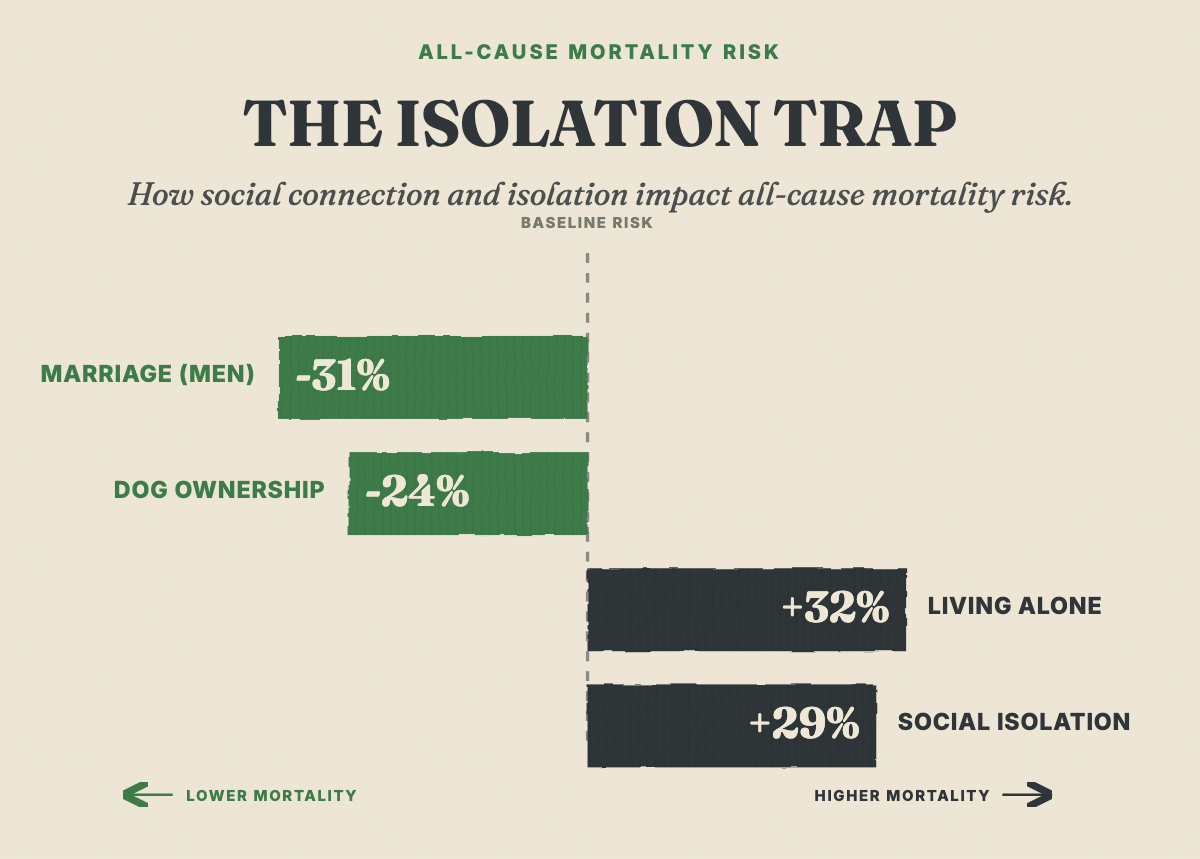
A meta-analysis pooling 148 studies and more than 308,000 people found that strong social relationships were associated with a 50% greater likelihood of survival compared with weak or insufficient ones (Holt-Lunstad et al., PLOS Medicine 2010). The U.S. Surgeon General picked up that same thread in a 2023 advisory, stating that the mortality impact of social disconnection is comparable to smoking up to 15 cigarettes a day, and that chronic social isolation raises the risk of early death by about 29% (Murthy, U.S. Surgeon General's Advisory 2023). That's a bigger effect than obesity or physical inactivity carries on its own.
The Harvard Study of Adult Development has tracked the same group of men for more than 85 years now, the longest-running study of its kind. Across every generation it's followed, one finding holds steadier than any biomarker on this list. The quality of your close relationships predicts both health and happiness in later life better than wealth, career, or cholesterol. The study's director, Dr. Robert Waldinger, put it plainly: "The people who were the most satisfied in their relationships at age 50 were the healthiest at age 80."
Marriage is one piece of that picture, though quality matters more than the paperwork. A meta-analysis of 126 studies covering more than 72,000 people found that higher marital quality tracked with better health across the board, including lower mortality risk (Robles et al., Psychological Bulletin 2014). A separate meta-analysis spanning 24 countries and more than 600 million person-records found that divorced or separated people carried about a 30% higher risk of death than married people (Shor et al., Social Science & Medicine 2012). A bad marriage doesn't get the same protection as a good one. A stable, connected one appears to matter for your body, not just your calendar.
Owning a dog moves a similar needle. The American Heart Association reviewed the evidence and concluded dog ownership is probably linked to lower cardiovascular risk, largely through more physical activity, better blood pressure, and improved autonomic nervous system tone (Levine et al., Circulation 2013). A Swedish cohort study following more than 3.4 million adults found that dog owners living alone had a lower risk of cardiovascular death than non-owners living alone (Mubanga et al., Scientific Reports 2017). A separate meta-analysis found dog owners had roughly a 24% lower risk of dying from any cause than non-owners, and heart attack survivors who owned a dog had about a 65% lower risk of dying afterward (Kramer et al., Circulation: Cardiovascular Quality and Outcomes 2019). A dog gets you outside every day, gives you a reason to move, and gives you something warm to come home to. That's a plausible, unglamorous explanation for the numbers.
Then there's purpose. Having a clear reason to get up in the morning, separate from any relationship, predicts how long you live. A 14-year study using the Midlife in the United States sample found that people with a stronger sense of purpose lived longer, even after accounting for other measures of psychological well-being, and the benefit held regardless of age or whether someone had retired (Hill and Turiano, Psychological Science 2014). A separate study following nearly 7,000 American adults over 50 found that people who described their lives as meaningful had a lower risk of dying over the following four years, an association that held specifically for heart and digestive disease deaths (Alimujiang et al., JAMA Network Open 2019).
A handful of people who'd show up for you, a reason to get out of bed that isn't just obligation, and maybe a dog will cover most of it. You don't need a mission statement for any of this.
I don't think there's a magic number, but let’s say four is a good benchmark. If there are four people in your life you could call about anything, at any time, and know they'd be there, that's something worth noticing and protecting.
None of this shows up on a blood panel, but I'd put it ahead of every number that does. The other six measures still matter. Here's where I'd start.
You know the priority I put on a sound spiritual relationship giving life meaning and purpose. Not holding yourself so highly. Putting others first. Making sacrifices that benefit others. Gratitude! Those things in life are difficult to quantify and measure but so vital to health (and longevity).
Waist-to-hip ratio
The bathroom scale and BMI both miss the one thing that actually matters, where you carry your fat, not just how much of it you have.
Waist-to-hip ratio catches that, because it measures location instead of total mass. Fat is real estate. Location decides how dangerous it is.
Fat on your hips and thighs is mostly harmless, and it even does some useful hormonal work. The fat to worry about sits inside your abdominal cavity, wrapped around your organs. Doctors call it visceral fat. It pumps out inflammatory molecules, drives insulin resistance, and disrupts metabolism everywhere in the body.
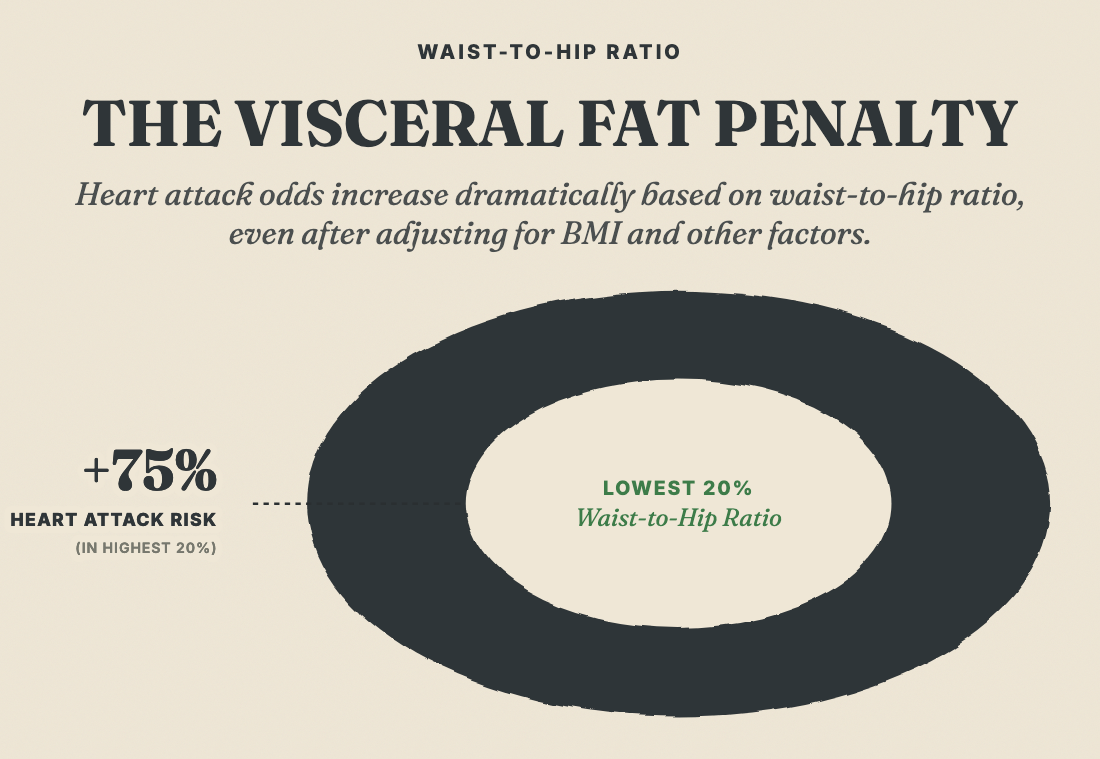
The INTERHEART study tested this directly. Researchers followed more than 27,000 people across 52 countries and compared different obesity measures for predicting heart attack risk. BMI barely mattered once waist-to-hip ratio was factored in. Waist-to-hip ratio showed a clean, steady climb in risk as the number rose. People in the highest fifth had about 75% higher odds of a heart attack than people in the lowest fifth, even after adjusting for age, sex, region, and smoking (Yusuf et al., Lancet 2005).
Here's what that means for anyone with a genetic card they can't change. Lp(a) is a cholesterol particle that's roughly 90% inherited. About one in four people carry an elevated level, and the standard advice is that there's not much to do about it.
That advice is incomplete. A 2025 analysis of the MESA cohort found that high Lp(a) barely raised cardiovascular risk in people with a low waist-to-hip ratio. In people with a high waist-to-hip ratio, that same Lp(a) level became a much stronger predictor of heart disease (MESA analysis, Progress in Cardiovascular Diseases 2025). A genetic risk factor's danger depends heavily on the metabolic environment it's sitting in. That's why I care so much about visceral fat specifically. Lowering it changes the whole physiological neighborhood every other number lives in, it’s not linear.
Waist-to-hip ratio and strength-to-weight ratio, the very next measure on this list, aren't two separate report cards. They're pulling from the same tank. Skeletal muscle is the body's largest site for clearing glucose out of the bloodstream. More muscle relative to your size means more capacity to soak up that glucose, which means less insulin needed to do the job, which means less of the fat-storage signal reaching your liver. Less muscle does the opposite. It's part of why sarcopenic obesity, the combination of low muscle mass and high body fat, carries worse metabolic and cardiovascular risk than either problem carries alone. A study of 1,741 adults over 65 found that women with a high waist-to-hip ratio had measurably lower grip, shoulder, and hip strength, especially at a normal body weight, and strength climbed as waist-to-hip ratio improved regardless of body mass index (Castillo et al., Biogerontology 2015). The tape measure and the strength test are reading two sides of the same coin.
A reasonable target is below 0.80 for women and below 0.95 for men, a useful marker rather than an exact science.
Getting there isn't complicated, though it takes consistency. Sleep, exercise, and eating in a way that doesn't spike your blood sugar all day will do more for visceral fat than anything else.
Strength-to-weight ratio
I just made the case that this ties directly to waist-to-hip ratio. Muscle is what gives you the metabolic room to keep visceral fat in check, so I think of these two as a pair.
This one's hard to pin to a single cutoff, but I still think it's one of the most important measures on this list.
Rather than isolate leg strength, grip strength, or any other single metric, I like a simpler gut check built on three movements. Chin-ups for upper-body pulling. Push-ups for upper-body pushing. Bodyweight squats for lower-body strength and endurance. Squats are a reflection of how much muscle you have in the largest muscles of your body. More muscle is better.
All three automatically scale to your body weight, which is the whole point. A strong 250-pound man and a strong 120-pound woman can both pass the test on their own terms.
Use it as a benchmark, not gospel. Test yourself now, track it over the next year, and adjust as you see fit.
High-sensitivity C-reactive protein
Your liver makes C-reactive protein whenever something in your body is inflamed. It isn't specific to any one disease. The "high-sensitivity" part just describes the lab test, which is why you'll see it written as hs-CRP on your results.
It's a blunt instrument. It tells you something's wrong without telling you what or where.
It isn’t an expensive test. A standard lab can run it for about $6. Compare that to specialized inflammatory markers like TNF-alpha or IL-17. Those are a little more expensive. Most people can get an hs-CRP today without a financial gut punch, and it still opens a window into one of the biggest drivers of chronic disease.
Inflammation sits underneath nearly every chronic disease we treat. In the brain, chronic overactivation of immune cells called microglia contributes to Alzheimer's disease. In the arteries, inflammation inside the vessel wall is a defining, causative feature of atherosclerosis and plaque buildup. Certain inflammatory signaling molecules also act directly on the brain as neurotransmitters, which is part of why chronic inflammation ties to anxiety and depression too. Different diseases, the same process underneath.
As a general guide, hs-CRP under 1.0 mg/L is low risk, 1 to 3 mg/L is intermediate, and above 3 mg/L is high risk.
If yours comes back elevated, run what I'd call a lifestyle assessment. Is your sleep suffering? Are you sedentary? Is your diet mostly ultra-processed food? Are you carrying extra visceral fat? Find the weakest link, fix it, then recheck the number.
One caveat. hs-CRP spikes temporarily after a hard workout, a bad night of sleep, or an infection. If you just had the flu or food poisoning, don't panic over a high reading. That's your immune system doing its job, not a sign you're developing heart disease.
Fasting insulin
As metabolic health slips, the pancreas responds the way you'd expect. It makes more insulin. If your body's grown resistant to insulin's signal, why not turn up the volume?
Here's the catch. Insulin resistance doesn't hit every tissue evenly, and it doesn't even hit every job inside the same organ evenly. Scientists call this selective insulin resistance, and it's a big part of why metabolic disease does so much damage (Brown and Goldstein, Cell Metabolism 2008).
Take the liver. Insulin normally does two jobs there. First, it acts as a brake on making new glucose, since there's no need to manufacture sugar when you've just eaten and glucose is already circulating. Second, it acts as an accelerator for fat storage, pushing the liver to convert extra carbohydrate into fat, a process called de novo lipogenesis.
As insulin resistance sets in, you keep making glucose but your body isn’t using it properly. The pancreas cranks out more insulin, and the liver responds by making more fat and more sugar at the same time. Elevated blood sugar and elevated triglycerides together are the defining fingerprint of metabolic dysfunction, and this can go on for years while glucose still reads normal on a lab report, because the pancreas is quietly working overtime to keep it there.
That's why I pay attention to fasting insulin, not just glucose or HbA1c.
Population data backs this up. Insulin resistance scores built from lipoprotein particle data, such as the LP-IR score, have tracked more closely with cardiometabolic risk than LDL cholesterol does in some cohort studies. Most people don't have access to an LP-IR test, so fasting insulin is the practical application.
There's no universal cutoff, but many metabolic health clinicians aim for under 5 to 7 microIU/mL as optimal, 7 to 12 worth monitoring, and over 12 a clear signal of insulin resistance. Standard lab reference ranges go up to 25, which tells you that "normal" and "optimal" are different things here. Remember my “normal” lab discussions.
Lowering it starts with cutting added sugar and sweets, then cutting back on rapidly digesting carbohydrates. I think under 100 grams of net carbohydrate a day is a reasonable starting point for a lot of people, though it varies.
Blood pressure
You expected this one. Lower is generally better, down to about 115/75 mmHg, meaning a systolic (top number) under 115 and a diastolic (bottom number) under 75.
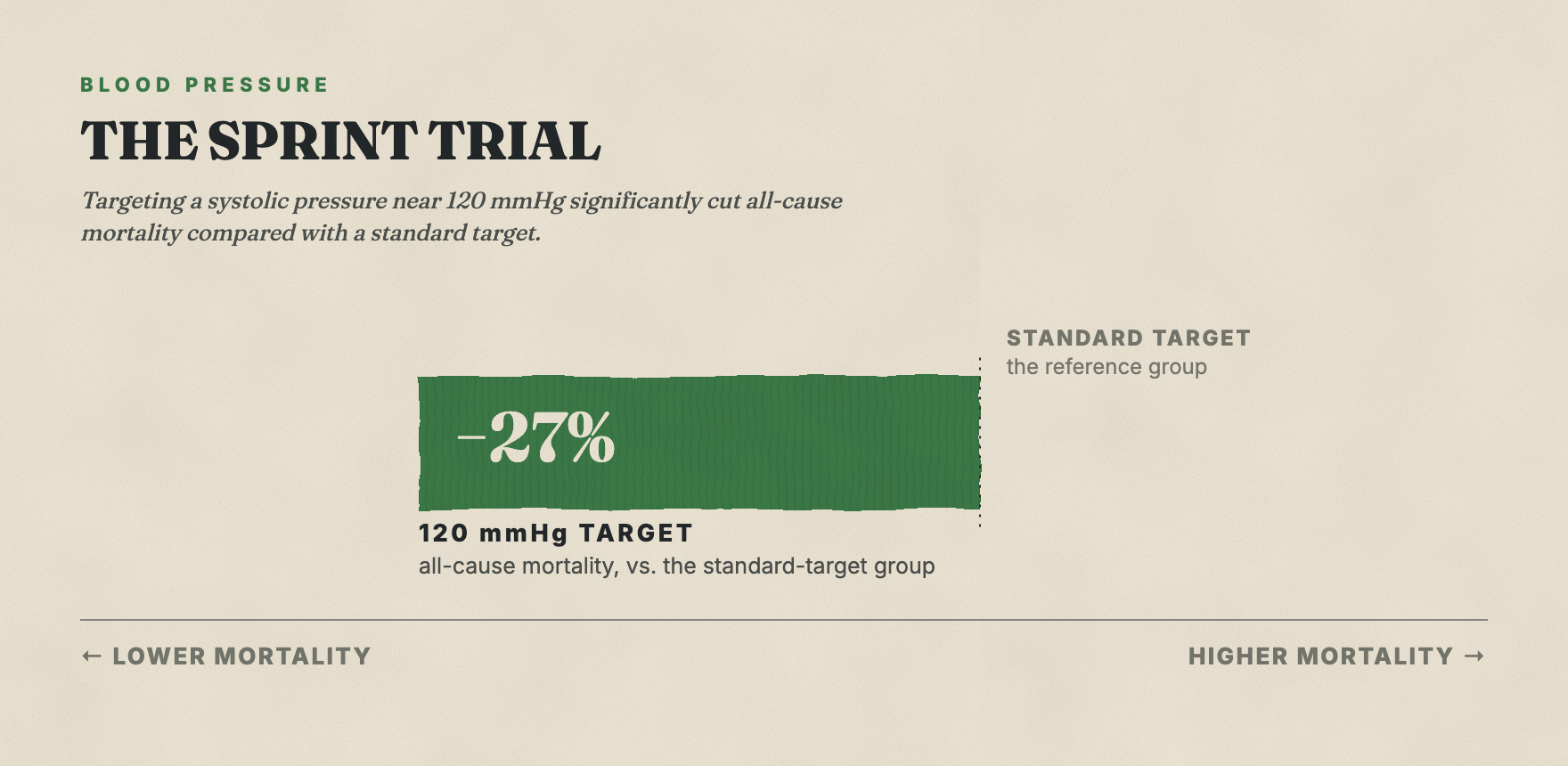
The SPRINT trial, a large randomized trial published in the New England Journal of Medicine, tested this directly. Targeting a systolic pressure near 120 mmHg cut the combined risk of heart attack, stroke, heart failure, or cardiovascular death by roughly 25%, and cut all-cause mortality by 27%, compared with a standard target (SPRINT Research Group, NEJM 2015). That's a large effect for changing one number.
A few things move that number more than anything else.
Regular aerobic exercise retrains your cardiovascular system. It boosts nitric oxide, which helps arteries relax, quiets the fight-or-flight nervous system, improves insulin sensitivity so your kidneys release more sodium and water, and keeps arteries more elastic as you age. A simple target is 150 minutes of moderate Zone 2 activity a week.
Carrying less visceral fat helps too, for a specific reason. Insulin resistance tied to excess body fat causes the kidneys to hang onto more sodium and water, which expands blood volume. Inflammation from visceral fat stiffens blood vessels so they can't relax as easily. Excess fat also activates a hormone system called the renin-angiotensin-aldosterone system, which further tightens blood vessels and holds onto sodium. Push more fluid through narrower, stiffer pipes and pressure goes up. Lose the fat and much of this reverses.
Sodium sensitivity depends on how much fat you're carrying. In a classic study, researchers put participants with and without obesity through alternating high-salt and low-salt diets, two weeks at a time. Only the participants carrying excess weight saw their blood pressure drop meaningfully when salt was restricted (Rocchini et al., NEJM 1989). Fat tissue secretes leptin, a hormone that appears to remodel blood vessels in the part of the brain that helps regulate blood pressure, and that may be part of why extra body fat makes people more salt-sensitive.
I don't think everyone needs to slash sodium aggressively. But if you're carrying excess weight and your blood pressure runs high, aiming for under 2,500 mg of sodium a day is a reasonable place to start.
If this article helped you, please share it. Your shares help keep Sage Matters free, and I only ask you to share it if you genuinely found it useful.
I'd put more weight on potassium. Think of sodium and potassium as opposite ends of a seesaw. Sodium raises blood volume and vascular tension. Potassium helps you excrete sodium, relaxes arteries, and calms the hormonal signals that raise blood pressure. A meta-analysis of randomized trials found that raising potassium intake meaningfully lowered blood pressure in people with hypertension, with a 24% lower risk of stroke tied to higher intake (Aburto et al., BMJ 2013). Aim for 3,500 to 4,200 mg a day. Avocado, cooked spinach, salmon, halibut, and cooked broccoli will get you there without the sugar.
One more thing worth mentioning: nattokinase, a supplement fermented from soybeans that's become popular for heart health. It appears to work partly through that same renin-angiotensin-aldosterone system, similar in some ways to how ACE-inhibitor blood pressure medications work. Randomized trials back it up with real numbers, not just theory. One placebo-controlled trial found nattokinase lowered systolic pressure by about 5.5 mmHg and diastolic by about 2.8 mmHg over eight weeks (Kim et al., Hypertension Research 2008). A later meta-analysis of six trials found smaller but still real average reductions of 3.5 mmHg systolic and 2.3 mmHg diastolic.
Triglyceride-to-HDL ratio
This one raises eyebrows among some clinicians, but I think a simple triglyceride-to-HDL ratio is one of the most useful numbers on a standard lipid panel, and it costs nothing extra. Just divide your triglycerides by your HDL cholesterol.
The ratio acts like a metabolic fingerprint. HDL tends to run higher in metabolically healthy people. Triglycerides, which are just fat circulating in your blood, tend to run lower. Low HDL paired with high triglycerides is one of the defining features of metabolic syndrome.
It also hints at the quality of your LDL particles without paying for the fancier test. A lower ratio tracks with more of the large, buoyant LDL particles and less of the small, dense kind that packs more easily into artery walls.
As rough targets, using the numbers in mg/dL, 1.0 or below is excellent and suggests strong insulin sensitivity. Between 1.0 and 2.0 is still consistent with good metabolic health. Above 3.5 is a red flag for underlying insulin resistance.
One caveat. Triglycerides bounce around depending on your last meal, alcohol, exercise, and how long you fasted before the draw. I've seen a patient's fasting triglycerides read 30 mg/dL one day and 75 the next. Don't obsess over a single number. Watch the trend.
Physical health matters enormously, and I've spent most of this letter on ways to measure it. But don't let the pursuit of a better number crowd out the actual life those numbers are supposed to protect. What actually counts is how much life fills the years you get, not the number of years themselves.
Ready to start restoring your health?
The membership is $300 a month, month to month. You get a written plan, teaching, and coaching. Sage does not diagnose you or give you a personal medical reading.
See the membershipReferences19
- Yusuf S, Hawken S, Ounpuu S, et al. Obesity and the risk of myocardial infarction in 27,000 participants from 52 countries: a case-control study (INTERHEART). Lancet. 2005;366(9497):1640-1649.
- Waist to hip ratio modifies the cardiovascular risk of lipoprotein(a): Insights from MESA. Progress in Cardiovascular Diseases. 2025.
- Castillo C, Carnicero JA, de la Torre MA, et al. Nonlinear relationship between waist to hip ratio, weight and strength in elders: is gender the key? Biogerontology. 2015;16(3):347-355.
- Brown MS, Goldstein JL. Selective versus total insulin resistance: a pathogenic paradox. Cell Metabolism. 2008;7(2):95-96.
- SPRINT Research Group. A randomized trial of intensive versus standard blood-pressure control. New England Journal of Medicine. 2015;373:2103-2116.
- Rocchini AP, Key J, Bondie D, et al. The effect of weight loss on the sensitivity of blood pressure to sodium in obese adolescents. New England Journal of Medicine. 1989;321:580-585.
- Aburto NJ, Hanson S, Gutierrez H, et al. Effect of increased potassium intake on cardiovascular risk factors and disease: systematic review and meta-analyses. BMJ. 2013;346:f1378.
- Kim JY, Gum SN, Paik JK, et al. Effects of nattokinase on blood pressure: a randomized, controlled trial. Hypertension Research. 2008;31(8):1583-1588.
- Nattokinase supplementation and cardiovascular risk factors: a systematic review and meta-analysis of randomized controlled trials. Reviews in Cardiovascular Medicine. 2024.
- Holt-Lunstad J, Smith TB, Layton JB. Social relationships and mortality risk: a meta-analytic review. PLOS Medicine. 2010;7(7):e1000316.
- Murthy VH. Our Epidemic of Loneliness and Isolation: The U.S. Surgeon General's Advisory on the Healing Effects of Social Connection and Community. HHS. 2023.
- Waldinger RJ. Harvard Study of Adult Development.
- Robles TF, Slatcher RB, Trombello JM, McGinn MM. Marital quality and health: a meta-analytic review. Psychological Bulletin. 2014;140(1):140-187.
- Shor E, Roelfs DJ, Bugyi P, Schwartz JE. Meta-analysis of marital dissolution and mortality: reevaluating the intersection of gender and age. Social Science & Medicine. 2012;75(1):46-59.
- Levine GN, Allen K, Braun LT, et al. Pet ownership and cardiovascular risk: a scientific statement from the American Heart Association. Circulation. 2013;127:2353-2363.
- Mubanga M, Byberg L, Nowak C, et al. Dog ownership and the risk of cardiovascular disease and death: a nationwide cohort study. Scientific Reports. 2017;7:15821.
- Kramer CK, Mehmood S, Suen RS. Dog ownership and survival: a systematic review and meta-analysis. Circulation: Cardiovascular Quality and Outcomes. 2019;12(10):e005554.
- Hill PL, Turiano NA. Purpose in life as a predictor of mortality across adulthood. Psychological Science. 2014;25(7):1482-1486.
- Alimujiang A, Wiensch A, Boss J, et al. Association between life purpose and mortality among US adults older than 50 years. JAMA Network Open. 2019;2(5):e194270.
More from Sage Matters

Toxic burden and chronic illness
A person can feel terrible and still be told every test is normal.
READ ARTICLE
What we actually know about microplastics in your body
In 2024, researchers in Italy removed carotid artery plaque from 257 patients during surgery and tested it for plastic.
READ ARTICLE
Longevity basics that actually have evidence behind them
Longevity basics that actually have evidence behind them
READ ARTICLE
Your Metabolism Isn’t Broken: Why Metabolic Guidelines Aren’t One-Size-Fits-All
Nutrition guidelines are framed as an absolute. Follow this ratio and you will get optimal results, don’t and your body will suffer. But at the end of the
READ ARTICLE