Introduction
Fresh raw ginger contains 6-gingerol, a bioactive compound that triggers mitochondrial biogenesis by activating the AMPK-PGC1α signaling pathway. This means it signals your cells to build more mitochondria, produce more ATP, and run cleaner energy metabolism. Grating fresh ginger and steeping it below boiling preserves the gingerol content that drying and high heat convert away.
Every morning, before coffee, before breakfast, before I check my phone, I drink a cup of fresh ginger tea.
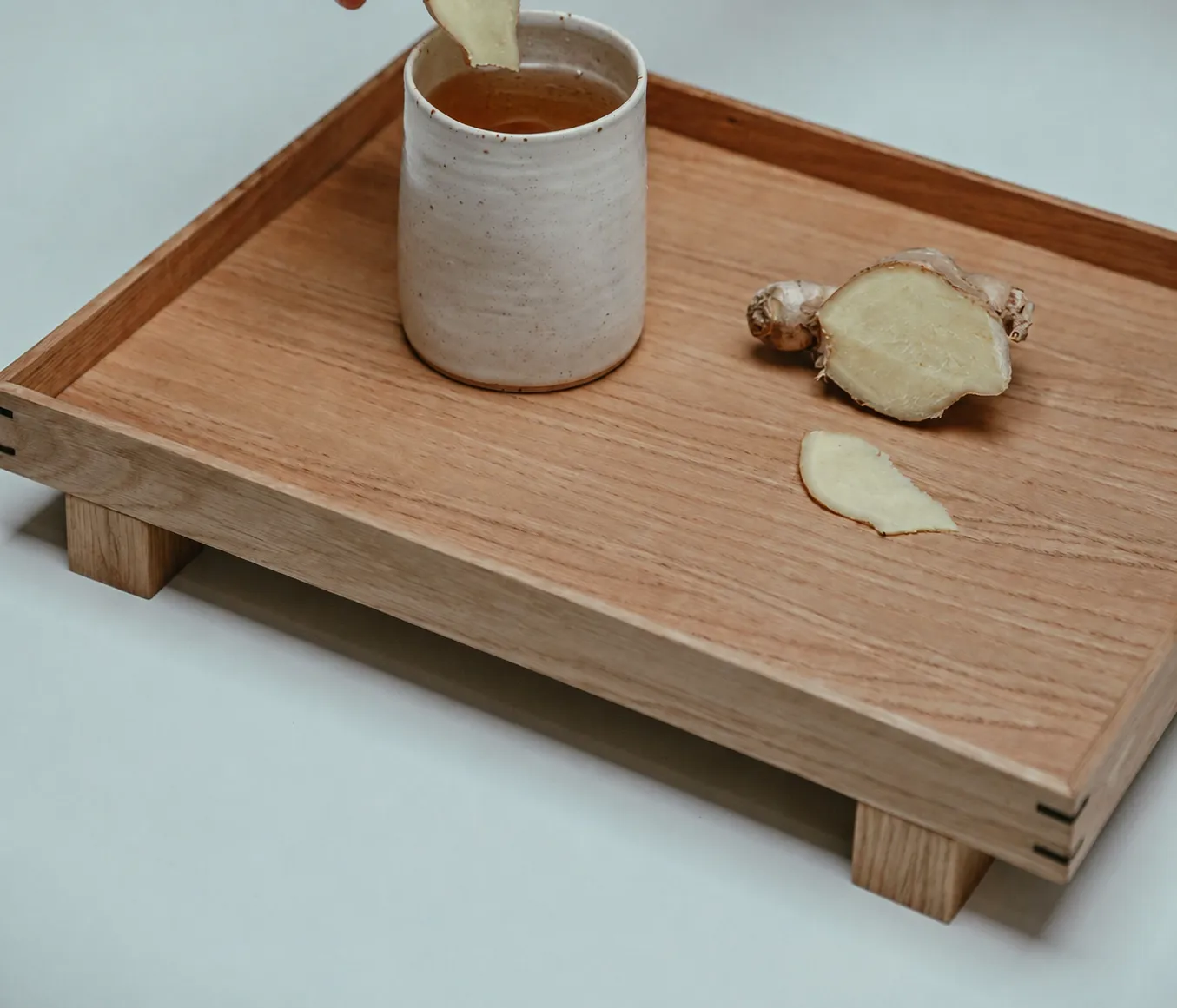
I make it the same way every time. I take a thumb-sized knob of raw ginger and grate a full tablespoon off it, skin and all. I steep it in water at around 180 degrees Fahrenheit. Not a rolling boil. Just below it. Five minutes. Then I drink the whole thing, including the grated pulp that settles at the bottom, which I chew up and swallow.
It is spicy as heck. I love it.
The ginger ritual began after looking seriously at what drives mitochondrial health. What came out of that research surprised me. This spicy root I'd been mostly ignoring has some of the most well-documented effects on cellular energy production I've encountered. That’s what got me started making the tea.
Here's what's actually happening in that cup.
What Gingerol Is, and Why Fresh Matters
The heat in fresh ginger comes from a family of compounds called gingerols. The main one is 6-gingerol. When you bite a piece of raw ginger and get that sharp, peppery warmth, that's 6-gingerol.
Fresh ginger and dried ginger are chemically different animals. This is the part most people miss.
When ginger dries, or when you cook it at high temperatures, the 6-gingerol converts into a different compound called shogaol. Shogaol has its own properties, but it's not 6-gingerol. If you want the gingerol specifically, you need fresh raw ginger. And grating matters. Breaking the cell walls releases more of the compound than slicing or chopping does.
Fresh ginger typically contains 1 to 3 percent gingerols by dry weight, according to published analyses of gingerol content across preparation methods. One tablespoon of finely grated fresh ginger delivers roughly 10 to 30 milligrams of 6-gingerol, depending on the root. That's a meaningful dose. Enough to move the needle at the molecular level.
The supplement industry sells gingerol in capsules, often as standardized extracts. I'm not against those. But there's something to the whole-food matrix, the combination of gingerols, volatile oils, and fiber in the root itself, that I prefer for a daily habit. Especially at this level of effort. Grating a tablespoon of ginger takes about 90 seconds.
What Mitochondria Actually Do
Most people have heard that mitochondria are the powerhouses of the cell. What that phrase misses is how much is riding on the quality of that power.
Every cell in your body, with a few exceptions, contains mitochondria. Heart cells may have several thousand of them. Their job is to take the food you eat and convert it into ATP, which is the actual currency your body spends on every biological process. Movement. Thinking. Repair. Immune function. All of it runs on ATP.
As you age, mitochondrial function declines. The mitochondria get less efficient. They produce more waste, specifically reactive oxygen species, and less usable energy per unit of fuel. Their numbers drop. The whole system degrades quietly, for years, before it shows up as symptoms.
This decline connects to almost every major disease of aging. Metabolic dysfunction. Cardiovascular disease. Cognitive decline. Muscle loss. The persistent fatigue that doesn't respond to sleep.
When researchers look at people who are thriving at 80, 85, 90, one thing that consistently separates them from their peers is better mitochondrial function. Not just genetics. Not just luck.
The question I started asking a few years back was: what can you do, daily, to protect and improve mitochondrial function? What makes them work better? What makes them multiply?
The answer to that question runs through a molecule called AMPK.
The Switch That Builds New Mitochondria
Inside every cell, there's a protein called AMPK. Think of it as your cells' energy gauge. When cellular energy runs low, AMPK switches on. When AMPK switches on, it triggers a cascade of processes designed to restore energy production and efficiency.
One of those processes involves activating a protein called PGC-1a. PGC-1a is the master controller of mitochondrial biogenesis. When it gets turned on, your cells start building new mitochondria. They increase the number of them. They improve the efficiency of the ones already there.
This AMPK-PGC1a pathway is the same one activated by exercise. It's the same one that gets triggered by caloric restriction. Two of the most studied and best-supported interventions for healthy aging both work, in part, through this exact mechanism.
6-gingerol activates this pathway too.
A 2019 study in the Journal of Food Science found that ginger extract, with 6-gingerol identified as the key active component, promoted mitochondrial biogenesis via AMPK-PGC1a signaling in both animal models and human liver cells. The researchers measured increases in mitochondrial mass, in mitochondrial DNA copy number, and in ATP production.1 More mitochondria. More fuel output. Better respiratory chain function.
A 2025 study published in PLOS One went further. The researchers found that a gingerol mixture enhanced mitochondrial density and respiratory capacity in fat cells, specifically improving both maximal and ATP-linked respiration, while also upregulating the proteins that make up the mitochondrial electron transport chain.
I want to be precise about what I'm saying here. Ginger is not a replacement for exercise. Nothing is. But the molecular mechanism is well-documented. 6-gingerol activates one of the core pathways associated with mitochondrial health and longevity.
You can activate the same cellular switch as a hard workout by drinking a cup of morning ginger tea. Ginger doesn't replace the workout. But the switch is the same.
The Fire That Fights Fire: Gingerol and Inflammation
There's a second benefit that connects directly to the mitochondria story.
Chronic low-grade inflammation destroys mitochondria over time. When inflammation goes unchecked, the mitochondria get caught in the damage. They produce more oxidative waste. Their ability to generate clean energy falls apart. This is part of why chronic inflammatory conditions and mitochondrial dysfunction so often show up together.
6-gingerol is one of the better-studied natural inhibitors of the primary inflammatory signaling pathway in the body, called NF-kB.
Here's the simplified version of how it works. When something triggers inflammation in your body, whether that's a poor diet, chronic stress, toxins, or tissue damage, a protein called NF-kB gets activated. Once active, NF-kB turns on genes that produce inflammatory proteins including COX-2, TNF-a, IL-1b, and IL-6. These are the molecules behind the chronic, smoldering inflammation that drives most of our major chronic diseases.
6-gingerol interrupts this cascade. Research published in Evidence-Based Complementary and Alternative Medicine found that 6-gingerol blocked ROS-activated NF-kB and COX-2 signaling in human liver cells. Separate research confirmed it also inhibits p38 MAPK, another key inflammatory enzyme.
The two mechanisms, mitochondrial biogenesis and anti-inflammatory action, work together. Less inflammation means the mitochondria can function in a cleaner environment. Better mitochondrial function means more cellular energy available for repair and immune regulation. They support each other.
Why Not a Full Boil
People ask about the temperature.
Boiling water sits at 212F. At that temperature, some of the more fragile bioactive compounds in fresh ginger start to degrade. The goal of steeping at 180F is to extract the gingerols with water hot enough to do the job, but not so hot that it works against you.
Very high temperatures also accelerate the conversion of 6-gingerol into shogaol, which is the compound more associated with dried ginger. For a fresh ginger steep, I want to preserve the gingerol profile, not cook it into something else.
180F is firmly in the extraction zone. It pulls the active compounds into the water without breaking them down.
This is approximately the temperature before a true boil, when small bubbles are forming at the bottom but nothing is breaking the surface yet.
The full five-minute steep also matters. Research on herbal compound extraction generally shows that shorter steep times leave significant amounts of active compounds in the plant material. Five minutes gets you most of what's available.
The Residue: Why I Eat It
The grated pulp settles at the bottom of the mug. Most people would leave it. I don't.
I drink the tea down to the last bit, then tip the remaining pulp into my mouth and chew it up. The heat has mellowed the raw bite somewhat. Still spicy. A little fibrous. Grainy in texture. I like it.
The reason I do this is simple enough. Steeping in water extracts the water-soluble fraction of the gingerols. The fiber in the grated pulp holds a portion of the active compounds that don't fully migrate into the water. By eating the residue, I'm capturing more of what the root has to offer.
I can't give you a precise percentage on that. The research on fresh ginger tea specifically, as opposed to standardized extracts, is thinner than I'd like. But the basic chemistry makes sense, and the extra compounds in the residue cost nothing to capture.
There's also something about the full ritual of it. I wait 15 minutes before my freshly ground coffee with Ceylon cinnamon and coconut oil. Later.
How to Start Your Own Morning Ginger Tea
Getting this right doesn't require much. Here's exactly what I do.
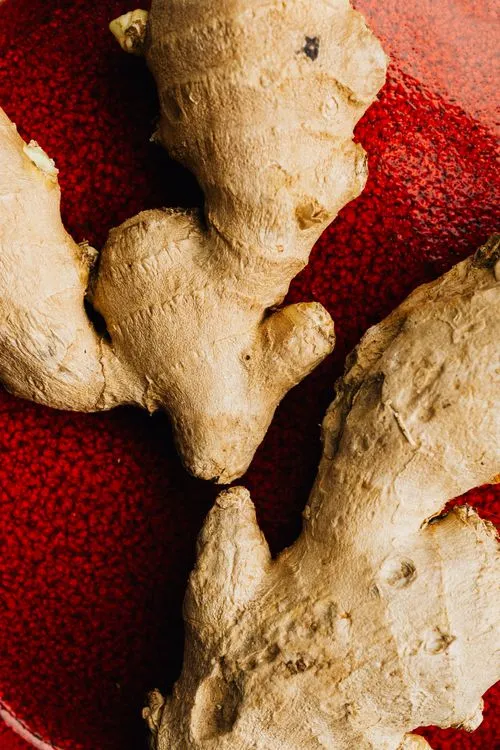
Start with a firm, fresh root. Look for smooth skin and a heavy feel for its size. Avoid anything shriveled or soft. Organic is worth it here since you're grating and consuming the skin.
Grate one tablespoon, skin and all. A microplane grater works best. It breaks the cell walls more thoroughly than a box grater or a knife, which releases more gingerol.
Heat water to about 180F. I add a small amount of room temperature water just so I don’t shock it. I then add water from a kettle pulled before it gets to a boil. I want hot water that isn’t so hot I have to wait for it to cool to drink. If you're at sea level, this is the moment just before a rolling boil when small bubbles gather at the bottom of the pot.
Steep for five minutes, covered. Covering the mug traps the volatile aromatic compounds that would otherwise escape with the steam. Then drink it, and chew the residue. Start with a half tablespoon if the heat is too much and work up over two weeks.
Is fresh ginger better than ginger supplements for these mitochondrial benefits?
Fresh ginger delivers 6-gingerol in its natural whole-food matrix alongside other phenolic compounds, volatile oils, and fiber that may work together synergistically. Most research on AMPK-PGC1a activation has used standardized extracts rather than fresh tea specifically, so supplements can offer more predictable dosing. I use fresh ginger because the evidence is strong enough and the cost and daily effort are minimal.
How much 6-gingerol is in one tablespoon of grated fresh ginger?
One tablespoon of finely grated fresh ginger root contains roughly 10 to 30 milligrams of 6-gingerol, depending on variety, freshness, and whether the skin is included. Fresh ginger typically contains 1 to 3 percent gingerols by dry weight, and fine grating increases extraction efficiency compared to slicing or chopping.
Does boiling water destroy gingerol?
Boiling water at 212F accelerates the conversion of 6-gingerol into shogaol and can degrade some heat-sensitive compounds. Steeping at 180F extracts gingerol effectively while preserving more of the original compound profile. For a daily habit, steeping below boiling is worth the small extra step.
Can ginger tea irritate the stomach?
For most people, ginger is soothing to the digestive tract and has well-documented anti-nausea and gastroprotective properties. High doses can cause heartburn or digestive discomfort in some people, particularly those prone to acid reflux. Starting with a half teaspoon and increasing over two weeks is a sensible approach.
Is there a best time of day to drink fresh ginger tea?
First thing in the morning on an empty stomach is a common approach, and may allow faster absorption of active compounds. There is no strong clinical evidence that the exact timing makes a dramatic difference. Consistency matters more than precision, so pick a time you can stick to every day.
Should anyone avoid ginger tea or check with their doctor first?
Ginger has mild blood-thinning properties and can interact with anticoagulant medications like warfarin. Anyone taking blood thinners should consult their physician before making fresh ginger tea a daily habit. For most healthy adults, one tablespoon of grated ginger in tea falls well within the range used safely in research and traditional medicine.
Ready to start restoring your health?
The membership is $300 a month, month to month. You get a written plan, teaching, and coaching. Sage does not diagnose you or give you a personal medical reading.
See the membershipReferences6
- Deng, X., et al. (2019). Promotion of Mitochondrial Biogenesis via Activation of AMPK-PGC1a Signaling Pathway by Ginger (Zingiber officinale Roscoe) Extract, and Its Major Active Component 6-Gingerol. Journal of Food Science, 84(8). https://ift.onlinelibrary.wiley.com/doi/abs/10.1111/1750-3841.14723
- [Author collective] (2025). A mixture of ginger phenolic compounds enhances mitochondrial function, activates AMPK, and reduces lipid accumulation in adipocytes. PLOS One. https://journals.plos.org/plosone/article?id=10.1371%2Fjournal.pone.0326690
- Li, X., et al. (2013). Attenuation of Proinflammatory Responses by S-[6]-Gingerol via Inhibition of ROS/NF-Kappa B/COX2 Activation in HuH7 Cells. Evidence-Based Complementary and Alternative Medicine. https://www.ncbi.nlm.nih.gov/pmc/articles/PMC3697228/
- Kim, S.O., et al. (2004). Inhibitory effects of [6]-gingerol on PMA-induced COX-2 expression and activation of NF-kB and p38 MAPK in mouse skin. BioFactors, 21(1-4):109-112. https://pubmed.ncbi.nlm.nih.gov/15735738/
- Ghasemzadeh, A., et al. (2018). 6-Gingerol content of ginger (Zingiber officinale Roscoe) by different drying methods. ResearchGate. https://www.researchgate.net/publication/328491516_6-gingerol_content_of_ginger_Zingiber_officinale_Roscoe_by_different_drying_metthods
- Peddireddy, V., et al. (2024). Beneficial Effects of Ginger Root Extract on Pain Behaviors, Inflammation, and Mitochondrial Function in the Colon and Different Brain Regions of Male and Female Neuropathic Rats. Nutrients, 16(20):3563. https://www.ncbi.nlm.nih.gov/pmc/articles/PMC11510108/
More from Sage Matters
Toxic burden and chronic illness
A person can feel terrible and still be told every test is normal.
READ ARTICLE
What we actually know about microplastics in your body
In 2024, researchers in Italy removed carotid artery plaque from 257 patients during surgery and tested it for plastic.
READ ARTICLE
Longevity basics that actually have evidence behind them
Longevity basics that actually have evidence behind them
READ ARTICLE
What are the important things to consider for longevity?
Focus on these things for a long and healthy life
READ ARTICLE